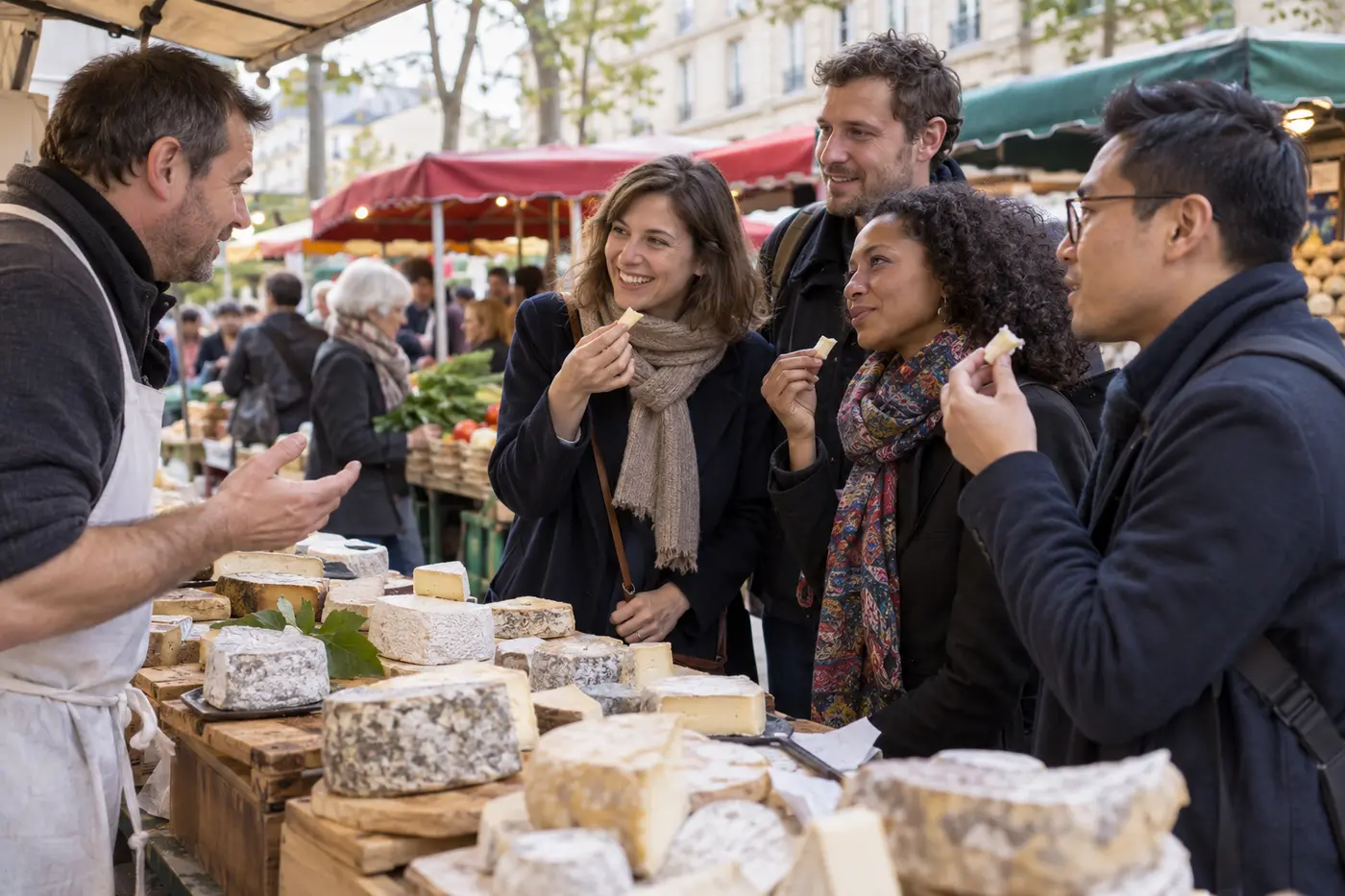
Paris has always been defined by the art of hospitality. From the clef d'or concierges of the palace hotels along Avenue Montaigne to the patron of the corner bistro who remembers your usual order, the city's genius lies in personal attention — the ability to make every visitor feel as though the city was arranged specifically for them. Now, artificial intelligence is learning that art, and the implications are profound.
The global AI concierge market, valued at approximately $3.2 billion in 2025, is projected to reach $14.8 billion by 2030, according to analysis from McKinsey Global Institute. Paris sits at the epicenter of this transformation — not merely as a deployment market, but as the philosophical testing ground for whether artificial intelligence can truly replicate the human intuition that defines French hospitality.
The stakes are enormous. France's tourism sector contributed €211 billion to national GDP in 2024, representing 8.1% of the total economy according to data from the World Tourism Organization. The Île-de-France region alone accounted for nearly half of that figure. In an increasingly competitive global tourism landscape, the integration of AI into the Parisian experience is not a luxury — it is a strategic imperative.
What Can an AI Concierge Do? Hotel Comparisons, Restaurant Reservations, Tour Bookings & More
An AI concierge combines large language model technology with structured hospitality knowledge bases, real-time event databases, and personalization algorithms to provide individualized recommendations at scale. Gabriel can compare luxury hotel rates across palace-rated properties, find the best Michelin star restaurants for your budget, arrange private guided tours of Versailles and the Louvre, compare travel insurance plans, evaluate Paris neighborhoods for real estate investment or relocation, and recommend executive education programs at INSEAD and HEC Paris — all in a single conversation.
Paris needs this technology for a simple reason: the city's offering is too vast. With over 40,000 restaurants, 200 museums, 1,500 hotels, 450 parks, and thousands of cultural events in any given month, the average visitor captures perhaps 2-3% of what Paris offers. Whether you are planning a luxury vacation, a corporate retreat, a destination wedding, or a permanent relocation, an AI concierge ensures the right opportunities find you.
President Macron's announcement of €2.3 billion in AI investment at the 2025 Paris AI Summit positioned France as Europe's undisputed AI capital. The country now hosts over 800 AI startups, with Paris-based Mistral AI becoming the continent's most valuable AI company.
Station F, the world's largest startup campus in the 13th arrondissement, serves as the gravitational center of Paris's AI ecosystem. More than 1,000 startups operate within its 34,000 square meters. The OECD AI Policy Observatory, headquartered in Paris, provides additional institutional gravity. France's proactive role in shaping the EU AI Act means AI concierge products developed in Paris operate within the world's most clearly defined legal and ethical boundaries.
For professionals considering Paris relocation, the tech sector offers compelling opportunities. Average AI engineer salaries in Paris reach €75,000-€120,000, with senior roles at Mistral AI, Dataiku, and Hugging Face exceeding €150,000. Coworking spaces such as WeWork, Spaces, and Morning Coworking offer flexible options from €250 per month. International professionals benefit from France's Tech Visa program, and the city's international schools — including the American School of Paris, British School of Paris, and Lycée International — make family relocation seamless.
How Does France's AI Investment Compare Globally?
| Country | AI Investment (2025) | AI Startups | Key Advantage |
|---|---|---|---|
| United States | $67.2B | 12,400+ | Venture capital depth |
| China | $15.8B | 4,900+ | Scale + government integration |
| United Kingdom | $5.1B | 3,200+ | Research + fintech crossover |
| France | €2.3B (govt) + €4.1B (pvt) | 800+ | Regulation clarity + cultural IP |
| Germany | €3.0B | 1,100+ | Industrial AI + manufacturing |
France's competitive advantage is not raw capital — it is the unique combination of regulatory clarity, cultural intellectual property (the "French art de vivre" brand), and a deep academic research base anchored by INRIA, CNRS, and École Polytechnique. For AI concierge applications, this cultural depth is the decisive advantage.
The most fascinating testing ground for AI concierge technology in Paris is the lobby of a palace hotel. France's "palace" distinction, awarded by Atout France, recognizes hotels demonstrating excellence beyond five stars. As of 2026, only 32 establishments hold this status, with the majority in Paris: Le Bristol, The Ritz, Four Seasons George V, Shangri-La, Hôtel de Crillon, The Peninsula, Le Meurice, Plaza Athénée, Park Hyatt Paris-Vendôme, and Mandarin Oriental.
A Clef d'Or concierge at Le Bristol maintains relationships with 500+ venues, holds decades of guest preference data in memory, and can arrange private Louvre tours or vintage Burgundy acquisitions. The question is not whether AI replaces this artistry — the answer is emphatically no. The question is how AI extends it, handling the 80% of informational requests to free human concierges for the irreplaceable 20%.
For travelers comparing luxury hotel options in Paris, average nightly rates range from €800-€1,500 at palace-rated properties, with premium suites starting at €3,000. Le Bristol Paris averages €950 per night for a superior room; The Ritz Paris starts at €1,200; Four Seasons George V from €1,100. Booking strategies matter significantly — direct bookings often include breakfast and spa credits worth €200-€400, while loyalty programs such as Marriott Bonvoy (Ritz), Accor Live Limitless (Raffles), and Preferred Hotels offer upgrade pathways. Travel insurance covering trip cancellation at these price points is essential — comprehensive plans from Allianz, AXA, and World Nomads typically cost 5-8% of the total trip value.
Paris's restaurant scene is a universe of extraordinary complexity — approximately 40,000 establishments, from 120 Michelin-starred restaurants (including 10 holding three stars in the 2026 Michelin Guide) to thousands of bistros, bistronomie innovators, and market stalls. An AI concierge addresses this complexity through multi-dimensional recommendation — analyzing cuisine type, price, chef lineage, seasonal menus, wine list depth, ambiance, noise levels, and real-time factors.
Fine dining in Paris ranges from €80-€150 per person at one-star establishments to €300-€500 at three-star restaurants like Alain Ducasse au Plaza Athénée, Le Cinq, and Arpège. Wine tasting experiences range from €75 for curated Left Bank cave visits to €450 for full-day Champagne vineyard tours with private transportation from Paris. Private chef experiences for intimate dinner parties start at €150 per person. Cooking classes at Le Cordon Bleu, Ritz Escoffier, and La Cuisine Paris range from €100-€350 per session — all bookable through Gabriel's curated partner network.
Data from the World Economic Forum indicates that food and wine experiences account for 31% of total visitor spending in Paris — the highest proportion of any major global city. AI-powered dining recommendation is critical infrastructure for the city's tourism economy.
Paris's 20 arrondissements spiral clockwise from the center like a snail shell, each possessing distinct character. The 1st and 2nd are monumental Paris. The Marais (3rd and 4th) evolved from aristocratic quarter to art gallery corridor. The Latin Quarter (5th) and Saint-Germain (6th) preserve intellectual Paris. The 10th has emerged as a multicultural gastronomy hub. The 11th is the nightlife epicenter. The outer arrondissements — from Montmartre (18th) to the rapidly gentrifying 19th and 20th — offer the most dynamic evolution.
An AI concierge synthesizes these characteristics into real-time recommendations — matching your interests to neighborhoods with the depth of a lifelong resident.
For those considering Paris real estate investment or relocation, arrondissement selection is the single most important decision. Average property prices range from €8,500 per square meter in the 19th to €16,000+ in the 6th and 7th. Rental yields vary from 2.5% in premium central arrondissements to 4.5% in the 10th, 11th, and 18th — where gentrification continues to drive capital appreciation. Expat relocation services, international mortgage brokers (with rates from 2.8% for non-residents), and property management companies for overseas investors are all navigable through Gabriel's real estate intelligence network.
According to the Paris Convention and Visitors Bureau (Paris je t'aime), Paris welcomed 44.1 million international visitors in 2024, surpassing pre-pandemic records. Hotel occupancy averaged 77.3%, with peaks exceeding 85%. Surveys by Deloitte indicate 67% of visitors feel they "didn't have enough time," while 43% reported difficulty finding authentic experiences beyond major tourist sites.
McKinsey estimates personalized recommendation technology increases visitor spending by 18-25%. Applied to Paris's €22.7 billion tourism economy, even 10% penetration would unlock €400-500 million in additional annual revenue.
For travelers planning a Paris trip, the logistics ecosystem has never been more competitive — or more confusing. Business class flights to Paris CDG from major hubs range from $2,800-$6,000 round trip, with airlines including Air France, Delta, United, British Airways, and Emirates competing aggressively on the premium cabin experience. Private airport transfers from CDG to central Paris cost €65-€120 depending on vehicle class, compared to €55-€70 for standard taxi service. Travel insurance plans covering trip cancellation, medical emergencies, and luggage loss range from $150-$600 per trip depending on coverage level — Allianz Travel, AXA, World Nomads, and Generali offer the most comprehensive European coverage. Paris city passes — including the Paris Museum Pass (€62 for 4 days), Paris Visite transport pass, and combined experience packages — can save visitors 30-40% on major attractions when purchased in advance.
Relocating to Paris requires navigating France's healthcare system — one of the world's best, but complex for newcomers. France's sécurité sociale provides universal coverage for residents, but enrollment takes 3-6 months. During this gap — and for comprehensive international coverage beyond the French system — expat health insurance is essential.
The leading international health insurance providers for expats in France include Cigna Global (premiums from €3,500/year for individual coverage), Allianz Care (from €2,800/year), AXA International (from €3,200/year), Bupa Global (from €4,100/year for comprehensive plans), and APRIL International (from €2,400/year with French healthcare system integration). Key comparison factors include inpatient and outpatient coverage limits, dental and vision inclusion, maternity benefits, mental health provisions, pre-existing condition policies, direct billing hospital networks in Paris, and worldwide emergency evacuation coverage.
For American expats specifically, maintaining US tax compliance while optimizing French healthcare costs requires careful coordination. FEIE (Foreign Earned Income Exclusion) and FBAR reporting obligations intersect with French social charges (approximately 20-23% of gross salary). Specialized international tax advisors — such as those at PwC Paris, Deloitte France, and boutique expat tax firms — typically charge €2,000-€5,000 annually for US-France cross-border tax preparation.
Supplementary insurance (mutuelle complémentaire) in France covers the 30% copayment not covered by the state system. Premium mutuelles from providers including Allianz France, AXA France, and Harmonie Mutuelle cost €50-€200 per month per person. Gabriel's insurance intelligence module compares all options based on your nationality, family size, health profile, and budget — ensuring optimal coverage at every price point.
France's immigration system offers multiple pathways for international professionals, entrepreneurs, and investors — but the bureaucratic complexity makes professional legal guidance virtually indispensable. The primary visa categories relevant to Paris-bound professionals include the Talent Passport (passeport talent) for qualified workers, EU Blue Card for highly skilled non-EU nationals, intra-company transfer visa (ICT), entrepreneur/freelancer visa (profession libérale), and the tech visa facilitated through La French Tech.
Immigration lawyers in Paris typically charge €2,000-€8,000 for a complete visa application package depending on complexity. Top-rated immigration law firms include Fragomen (global mobility specialists), Equance (expat tax and immigration integration), and boutique Paris firms specializing in Anglo-American clients. The Talent Passport — available to those earning above 1.5x the French minimum wage (approximately €3,100/month gross in 2026) — grants a 4-year multi-year residence permit with immediate work authorization for spouses.
For property investors, France's "visitor visa" (carte de séjour visiteur) requires proof of sufficient financial resources (typically €18,000+ annually per person) and comprehensive health insurance. The path from temporary to permanent residency (carte de résident) requires five years of continuous legal residence. French citizenship through naturalization is possible after five years with demonstrated language proficiency (B1 level) and integration. Gabriel's immigration intelligence provides step-by-step guidance, document checklists, and connections to vetted immigration attorneys in Paris.
Paris is continental Europe's premier private banking hub, with over €2.3 trillion in assets under management across its financial institutions. For high-net-worth individuals relocating to or investing in Paris, selecting the right private banking relationship is a decision with multi-generational implications.
The leading private banks in Paris include BNP Paribas Wealth Management (minimum €500,000, AUM €420B+), Rothschild & Co Wealth Management (minimum €1M+), Société Générale Private Banking (minimum €300,000), Lombard Odier Paris (minimum €1M+, Swiss heritage), and Pictet Wealth Management (minimum €1M+). Management fees typically range from 0.5-1.5% of AUM annually, with performance-based fee structures increasingly common.
French tax optimization for international residents requires specialized expertise. Key considerations include the Impôt sur la Fortune Immobilière (IFI) — France's wealth tax on real estate assets exceeding €1.3 million (rates from 0.5% to 1.5%), progressive income tax rates (0% to 45% plus additional contributions), capital gains tax on property sales (19% plus 17.2% social charges, with holding-period reductions), and favorable tax treatment under the "impatriate regime" — which exempts certain income components for qualifying new residents for up to 8 years.
France has double taxation treaties with over 120 countries, including comprehensive agreements with the United States, United Kingdom, Germany, Switzerland, and UAE. Cross-border estate planning is particularly critical — French forced heirship rules (réserve héréditaire) require a portion of estates to pass to children, which can conflict with testamentary freedom in common-law jurisdictions. Specialized wealth planning firms such as Deloitte Private, EY Private Client Services, and boutique French notaires provide integrated solutions.
Securing a mortgage in France as a non-resident is entirely possible — but requires understanding the French banking system's unique requirements. French mortgage rates in early 2026 range from 2.8% to 3.8% for 20-year fixed-rate loans, competitive by global standards. Non-resident borrowers typically face rates 0.3-0.5% higher than residents, with maximum loan-to-value ratios of 70-80% (compared to 80-90% for residents).
The French mortgage application process differs significantly from US and UK systems. Key requirements include proof of income (three years of tax returns for self-employed, six months of payslips for employed), French bank account (required before application), property valuation by a French-approved surveyor, life insurance (assurance emprunteur — mandatory and typically 0.2-0.4% of loan balance annually), and a total debt-to-income ratio below 35% (the Haut Conseil de Stabilité Financière's strict limit).
International mortgage brokers specializing in France include French-Mortgage.com, International Private Finance, and Crédit Agricole International. For buy-to-let investors, French rental income is taxed under the micro-foncier regime (30% flat deduction on gross rental income up to €15,000/year) or the régime réel (actual deduction of expenses including mortgage interest, maintenance, property management fees, and depreciation). Professional property management services in Paris charge 6-10% of gross rental income, with companies such as Lodgis, Paris Attitude, and specialist agencies managing furnished and unfurnished lettings. Gabriel provides mortgage comparison tools, broker recommendations, and investment return calculators across all 20 arrondissements.
For families relocating to Paris, school selection often determines neighborhood choice and quality of life. Paris hosts over 40 international and bilingual schools, with annual tuition ranging from €8,000 for bilingual French-English programs to €38,000+ at premium American and British curriculum schools.
The top international schools in Paris include the American School of Paris (ASP) in Saint-Cloud (€31,000-€38,000/year, IB Diploma, AP courses), British School of Paris (BSP) in Croissy-sur-Seine (€22,000-€28,000/year, A-Levels and iGCSE), International School of Paris (ISP) in the 16th (€28,000-€35,000/year, full IB from PYP to Diploma), EIB — The Victor Hugo School (€18,000-€24,000/year, French baccalaureate international option), and Marymount International School (€25,000-€32,000/year, IB World School). Most premium schools have waiting lists; applications 12-18 months in advance are recommended.
Families should also consider the French public system's international sections (sections internationales), available at select lycées including Lycée International de Saint-Germain-en-Laye and Lycée Honoré de Balzac — offering excellent bilingual education at no tuition cost. Educational consultants specializing in Paris school placement charge €1,500-€4,000 for comprehensive advisory services.
The EU AI Act establishes strict requirements for AI concierge systems: transparency, data minimization, and the right to human fallback. France's CNIL has issued specific guidance for AI in tourism requiring explainable algorithms, limited data retention, and disclosed commercial relationships.
These regulations are competitive advantages. In a market concerned about data privacy, Paris's clear regulatory framework provides trust that less regulated jurisdictions cannot match. For businesses deploying AI solutions in France, GDPR compliance consulting and EU AI Act advisory services are available from leading firms including Deloitte, PwC, and specialized Paris-based digital law firms. See our Editorial Policy for our full commitment to transparency.
For the estimated 240,000 expatriates living in Paris, securing the right health insurance is the single most important financial decision after housing. France's healthcare system, ranked among the world's best by the World Economic Forum, operates through a two-tier structure: the public Caisse Primaire d'Assurance Maladie (CPAM) social security system, which reimburses 70% of medical costs, and private supplementary insurance (mutuelle) that covers the remaining 30% plus additional services.
International expatriates face a critical choice between three pathways: enrolling in the French CPAM system (mandatory for employed residents after three months), maintaining international health insurance through global providers, or a hybrid approach combining both. Gabriel's insurance intelligence network analyzes these options based on your residency status, employment situation, family composition, and healthcare needs.
How Do International Health Insurance Plans for France Compare in 2026?
| Provider | Annual Premium (Individual) | Coverage Level | Key Advantage |
|---|---|---|---|
| Allianz Care | €3,200–€6,800 | Comprehensive worldwide | Largest global network, 1M+ hospitals |
| Cigna Global | €3,500–€7,500 | Comprehensive + dental/vision | 24/7 multilingual support, fastest claims |
| AXA International | €2,800–€5,500 | Modular plans | French-based, seamless CPAM integration |
| APRIL International | €2,200–€4,800 | Expat-focused | Best value, specialist in French expat market |
| Henner GMC | €2,600–€5,200 | CFE-compliant | CFE partnership, repatriation coverage |
| GeoBlue / BCBS | €3,800–€7,200 | US-standard abroad | Best for US expats, US network access |
Travel insurance for Paris visitors requires separate consideration. For luxury trips costing €5,000–€20,000, comprehensive travel insurance plans from benchmarked providers like Allianz Travel, AXA Assistance, World Nomads, and Generali typically cost 5–8% of the total trip value, covering trip cancellation, medical emergencies (critical in France where emergency room visits average €400–€1,200), luggage loss, and flight delay compensation. Business travelers should consider annual multi-trip policies, which offer significant savings over single-trip coverage — €300–€600 per year versus €150–€300 per trip.
France processes approximately 270,000 first-time residency permits annually, with Paris handling over 40% of applications according to the International Monetary Fund country data. The French immigration system offers multiple pathways — each with specific requirements, processing times, and legal complexities that benefit significantly from professional guidance.
The most common visa categories for Paris-bound professionals include the Talent Passport (passeport talent) for highly skilled workers, entrepreneurs, and investors — requiring a minimum €30,000 salary or €300,000 investment. The EU Blue Card, available for highly qualified employment with a minimum salary of €41,000 (2026 threshold), provides a pathway to permanent residency after five years. Family reunification visas require 18 months of legal residence and minimum income thresholds. The French Tech Visa, a subset of the Talent Passport, offers fast-track processing for founders of companies recognized by the French Tech ecosystem.
What Does an Immigration Lawyer in Paris Cost and When Do You Need One?
Paris immigration lawyers typically charge €2,000–€5,000 for standard visa applications, €5,000–€12,000 for complex cases involving business structuring or investor visas, and €1,500–€3,000 for renewal procedures. The top immigration law firms in Paris — including Fragomen (global leader with 60+ offices), Deloitte Legal France, PwC Legal, and specialized boutique firms — offer multilingual services and handle applications across all visa categories. For property purchases, a French notaire (€3,000–€8,000 depending on transaction size) handles the legal conveyancing, while international tax structuring for high-net-worth individuals typically requires both French and home-country legal counsel.
International schools in Paris represent another critical infrastructure element for relocating families. Annual tuition ranges from €15,000–€35,000 at institutions including the American School of Paris, British School of Paris, International School of Paris, Lycée International de Saint-Germain-en-Laye, and Deutsche Schule Paris. Waiting lists can extend 12–18 months for premium schools — Gabriel's education intelligence network provides availability tracking and application guidance.
Paris is the European Union's largest financial center by assets under management, with €5.2 trillion managed across the city's private banks, wealth managers, and asset management firms according to S&P Global. For high-net-worth individuals relocating to or investing through Paris, the private banking and wealth management ecosystem offers sophisticated services — but navigating the landscape requires specialized intelligence.
The top private banks in Paris serve clients with minimum portfolio thresholds ranging from €500,000 to €10 million. BNP Paribas Wealth Management (minimum €500,000, comprehensive French market expertise), Rothschild & Co Wealth Management (minimum €5M, multi-family office approach), Lombard Odier (minimum €1M, Swiss discretion with Paris operations), Edmond de Rothschild (minimum €1M, alternative investments focus), and Société Générale Private Banking (minimum €500,000, strong real estate advisory) represent the premier tier. Management fees range from 0.5–1.5% of assets under management annually, with performance fees of 10–20% above benchmark returns.
How Does French Tax Law Affect Expat Wealth Management and What Are the Key Planning Strategies?
France's tax regime requires careful planning for international residents. The impôt sur la fortune immobilière (IFI), France's real estate wealth tax, applies a progressive rate of 0.5–1.5% on net real estate assets exceeding €1.3 million. Income tax rates reach 45% for earnings above €177,106, with an additional 3–4% exceptional contribution on very high incomes. Capital gains on French property are taxed at 36.2% (19% income tax + 17.2% social charges), with holding period reductions making sales after 22 years tax-exempt.
Expat tax advisors in Paris — including firms like EY Global Mobility, KPMG Expatriate Services, Deloitte Global Employer Services, and specialized boutique practices — typically charge €2,000–€8,000 for annual French tax return preparation and €5,000–€15,000 for comprehensive tax planning engagements. For US expats facing dual taxation obligations, specialized Franco-American CPAs are essential, with firms like FBA and US Tax & Financial Services offering packages starting at €3,000 annually. France's extensive network of double taxation treaties (over 120 countries) provides relief, but structuring requires professional guidance.
The Paris fintech ecosystem is also reshaping wealth management. Digital banking platforms including Boursorama (France's largest online bank, 5M+ customers), Fortuneo, N26 France, and Revolut France offer fee-free international transfers and multi-currency accounts. Robo-advisory platforms like Yomoni, Nalo, and WeSave provide algorithm-driven portfolio management at management fees of 0.7–1.6% — a fraction of traditional private banking costs. For crypto-savvy investors, France's PSAN (prestataire de services sur actifs numériques) registration framework provides regulatory clarity for digital asset management through licensed platforms.
The trajectory points toward ambient intelligence — systems that anticipate needs. Walking through the 6th on a rainy afternoon, your AI concierge notices the Musée de l'Orangerie has a 15-minute wait versus 90 at Musée d'Orsay, and suggests: "The Nymphéas are best in afternoon light. There's no queue. Shall I suggest the perfect café for afterward?"
The Stanford Institute for Human-Centered AI notes the most successful AI systems amplify human capability rather than replace judgment. In Paris, this means the AI concierge that knows 40,000 restaurants but understands that sometimes the best recommendation is to wander without a plan, following the light along the Seine until something extraordinary finds you.
Paris has always been the city that teaches the world how to live. It may now be the city that teaches artificial intelligence how to serve.
For professionals and executives, Paris offers unmatched opportunities for career development and lifestyle enrichment. Executive education programs at INSEAD (Fontainebleau campus), HEC Paris, ESSEC, and Sciences Po rank among the world's finest, with executive MBA programs ranging from €70,000-€120,000. Short executive courses in leadership, digital transformation, luxury brand management, and AI strategy typically run €5,000-€15,000 for one to four-week intensives. Corporate retreat planning in Paris and the Île-de-France region — from château venues in the Loire Valley to design hotels in Le Marais — represents a growing segment that Gabriel serves with particular depth.
Destination weddings in Paris remain among the most sought-after globally, with couples spending an average of €45,000-€150,000 on venue hire, catering, photography, floristry, and planning services. Luxury event venues include the Pavillon Cambon, Hôtel Salomon de Rothschild, and Palais de Tokyo, with specialized wedding planners commanding fees from €5,000 to €25,000. Gabriel provides curated access to the city's most exclusive venue options and vetted service providers.